Search has changed dramatically in the last couple of years. People are no longer just typing queries into search engines and clicking on links. Instead, they are asking questions directly to AI tools like ChatGPT, Google Gemini, and getting instant answers through Google AI Overviews.
This shift has created a new challenge for businesses, marketers, and content creators. Even if your website ranks on Google, users may never visit it because AI tools are providing the answers directly.
So the real question is no longer “How do I rank on Google?”
The question is “How do I get featured inside AI-generated answers?”
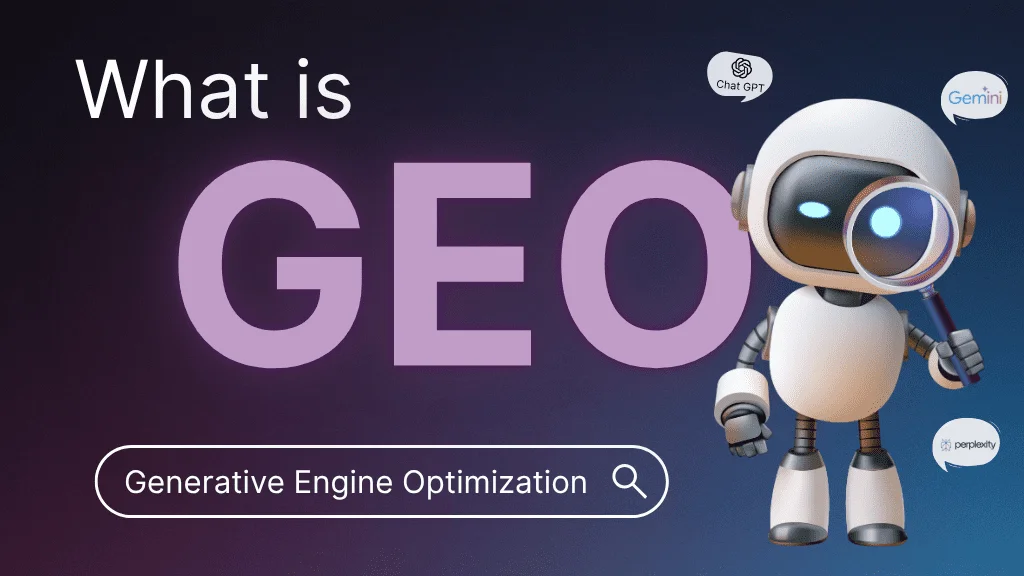
This is where Generative Engine Optimization (GEO) comes into play.
What is GEO (Generative Engine Optimization)?
GEO is the process of optimizing your content so that AI systems can easily understand, trust, and use it as a source when generating answers.
Unlike traditional SEO, which focuses on rankings, backlinks, and keywords, GEO focuses on how content is interpreted by AI models. The goal is to ensure that your content becomes part of the answer that users see.
In simple terms, SEO helps you rank. GEO helps you get cited.
Why Getting Featured in AI Answers Matters
AI-generated answers are rapidly replacing traditional search results. When users search for something, they often see a summarized answer at the top instead of a list of links.
If your content is included in that answer, you gain strong visibility and authority. Your brand becomes part of the solution users trust.
On the other hand, if your content is not used by AI, you risk losing traffic even if your rankings are good.
This is why GEO is becoming essential for digital marketing in 2026 and beyond.
How AI Chooses Content
To optimize for GEO, it’s important to understand how AI tools select and use content.
First, AI prefers clear and direct answers. Content that quickly explains a concept in simple language is more likely to be used.
Second, structure plays a major role. AI systems scan headings, bullet points, and short paragraphs to extract information.
Third, trust and credibility matter. Content with data, examples, and real insights is prioritized.
Finally, context is more important than keywords. AI understands meaning, not just phrases. So content should be written with depth and clarity rather than keyword repetition.
Step-by-Step GEO Strategy to Get Featured
Focus on Question-Based Queries
AI tools are designed to answer questions. This means your content should target queries that reflect real user intent.
Instead of writing generic content around broad keywords, focus on questions like:
- What is GEO and how does it work
- How to rank in AI search results
- Why SEO traffic is dropping
These types of queries align directly with how people interact with AI tools.
Start with a Direct Answer
One of the most effective GEO techniques is placing a clear answer immediately after the heading.
For example:
What is GEO?
GEO is a strategy that helps optimize content for AI search engines so it can be understood, summarized, and cited in AI-generated answers.
This format makes it easy for Artificial intelligence systems to extract your content and use it directly.
Use Clear and Logical Structure
Content should be organized in a way that is easy to scan and interpret.
Use a proper hierarchy:
- Main headings for primary sections
- Subheadings for detailed explanations
- Short paragraphs for readability
Avoid long blocks of text. Break information into smaller sections so AI can process it efficiently.
Add Depth with Examples and Context
Generic content does not perform well in GEO. Artificial intelligence systems prefer content that provides deeper insights.
For instance, instead of simply stating that digital marketing is important, explain how it works, why it matters, and include real-world examples.
This helps AI understand the topic better and increases the chances of your content being selected.
Build Topical Authority
Publishing one article is not enough. AI systems evaluate your overall expertise on a subject.
You need to create multiple related articles around a topic. For example:
- What is GEO
- GEO vs SEO
- GEO strategy for businesses
- How AI search works
This creates a strong content network and signals authority to AI systems.
Optimize for Answer Engine Optimization (AEO)
GEO works closely with AEO. To improve your chances of being featured, include sections that directly answer common questions.
Adding FAQ sections is highly effective. Each question should have a clear and concise answer.
This format aligns perfectly with how AI tools extract and present information.
Strengthen Your Brand Presence
AI systems do not rely only on your website. They also consider your brand’s presence across the internet.
If your brand is mentioned on multiple platforms such as blogs, social media, and forums, it increases trust.
The more your brand appears in relevant discussions, the more likely AI is to consider it a reliable source.
Distribute Content Across Platforms
Publishing content only on your website limits your reach. To improve visibility, distribute your content across multiple platforms.
Platforms like LinkedIn, Medium, and YouTube are often referenced by AI systems.
Repurposing your content into different formats increases the chances of being discovered and cited.
Write Naturally for Humans
A common mistake is writing overly optimized content that feels robotic. AI systems are now advanced enough to recognize natural language.
Content should be conversational, clear, and helpful. Focus on delivering value rather than forcing keywords.
Write as if you are explaining the topic to a real person.
Keep Content Updated
Freshness plays an important role in GEO. AI systems prefer updated and relevant information.
Regularly update your content with new insights, examples, and data. This ensures that your content remains useful and competitive.
Example of How GEO Works
Consider a user asking, “How to generate leads using SEO in 2026?”
AI tools will scan multiple sources and look for structured, clear, and relevant answers. They will then combine information to generate a final response.
If your content includes step-by-step guidance, clear explanations, and real examples, it has a higher chance of being selected.
Common Mistakes to Avoid
Many websites fail to get featured in AI answers because they follow outdated strategies.
Some common mistakes include focusing only on rankings, ignoring user intent, writing long unstructured paragraphs, and not providing clear answers.
Another major issue is lack of authority. Without depth, data, or credibility, content is less likely to be trusted by AI systems.
The Future of Search
Search is evolving rapidly. Traditional SEO is still important, but it is no longer enough.
The future combines SEO, AEO, and GEO. Businesses that adapt to this shift will gain a strong competitive advantage.
Instead of thinking only about rankings, the focus should be on becoming the best possible answer.
Final Thoughts
Getting featured in AI tools like ChatGPT, Gemini, and AI Overviews is not about luck. It requires a clear and strategic approach.
The key is to create content that is easy to understand, well-structured, informative, and trustworthy.
As Artificial intelligence continues to shape the way people search for information, the brands that succeed will be those that focus on clarity, value, and authority.
In the end, the goal is simple.
Do not just try to rank your content.
Make your content the answer.