Multimodal Search, AI Search & What It Means for SEO
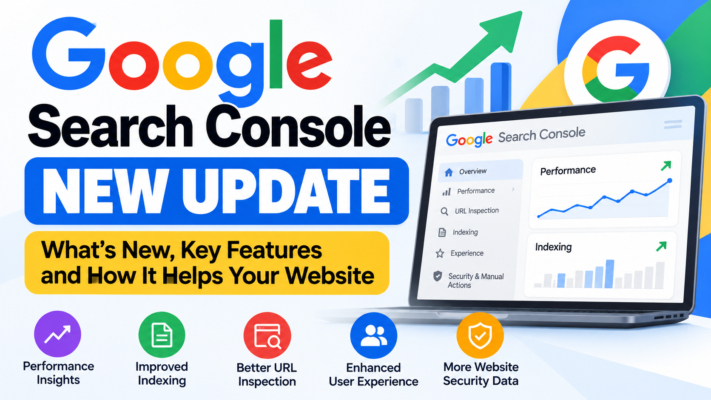
Google Search is changing rapidly, and SEO is no longer limited to ranking a website for traditional keywords. With the latest Google Search Console updates in 2026, website owners and SEO professionals have more ways to understand how their content is discovered across modern search experiences.
One of the most important developments is the introduction of Multimodal Search reporting in Google Search Console. Alongside this, Google has expanded its reporting around Generative AI search experiences, including AI Overviews and AI Mode.
For businesses, marketers, bloggers, and SEO professionals, these changes represent an important shift in how search visibility should be measured and optimized.
In this guide, we will explain the latest Google Search Console update, what Multimodal Search means, how AI search is changing SEO, and what businesses should do to prepare.
What Is the New Google Search Console Update?
Google Search Console has traditionally helped website owners understand performance through metrics such as:
- Clicks
- Impressions
- Average CTR
- Average position
- Search queries
- Top pages
- Countries
- Devices
The latest updates expand this understanding beyond traditional text-based searches.
Google is increasingly providing visibility into AI-powered and multimodal search experiences, allowing SEO professionals to understand how users discover websites through different types of search interactions.
This means SEO reporting is gradually moving from:
Keyword → Ranking → Click
toward a broader model:
Text + Image + Video + AI → Search Visibility → Website Traffic
This is an important development for modern SEO.
What Is Multimodal Search?
Multimodal Search refers to search experiences where users can use more than traditional text to find information.
Instead of typing:
“What type of industrial equipment is this?”
a user could take a picture of the equipment and use Google to identify or search for it.
Visual search technologies such as Google Lens and other image-based search experiences are making this behavior increasingly common.
For businesses, this creates a new opportunity.
A potential customer may discover a product through:
- An uploaded image
- Google Lens
- A screenshot
- A product photograph
- Visual search
- Image-based queries
- Text combined with images
This means your website’s images can become another discovery channel.
Why Multimodal Search Matters for SEO
Traditional SEO has focused heavily on text.
SEO professionals usually optimize:
- Page titles
- Meta descriptions
- Headings
- Keywords
- Content
- Internal links
- Backlinks
These elements remain important, but visual content is becoming increasingly relevant.
Imagine an industrial equipment company that has hundreds of product pages.
A potential buyer may not know the exact product name. Instead, they may have an image of the equipment.
If Google understands the image and identifies relevant content, a properly optimized product page could become part of that user’s search journey.
This is why Image SEO should no longer be treated as a minor SEO activity.
What Is Image SEO?
Image SEO is the process of optimizing images so that search engines can better understand and discover them.
Important image SEO practices include:
1. Use Descriptive File Names
Avoid:
IMG_1234.jpg
Instead, use a descriptive filename such as:
industrial-safety-equipment.jpg
The filename provides useful context about the image.
2. Optimize Alt Text
Alt text helps search engines and users understand what an image represents.
For example:
Poor:
image123
Better:
industrial safety equipment for construction sites
However, avoid stuffing keywords unnaturally into alt text.
3. Use Relevant Images
Images should support the actual content of the page.
A relevant image provides more context than a generic stock photograph.
4. Compress Images
Large images can negatively affect page performance.
Use modern formats such as:
- WebP
- AVIF
where appropriate.
5. Add Context Around Images
Search engines don’t understand an image only from the image itself.
The surrounding:
- Heading
- Paragraph
- Caption
- Page topic
- Structured data
can provide additional context.
Google Search Console and Generative AI Search
Another major development is Google’s growing focus on Generative AI Search.
Google’s search experience now includes AI-powered features such as:
AI Overviews
AI Overviews provide an AI-generated summary at the top of some search results.
Instead of immediately showing only traditional blue links, Google can provide a summarized answer with supporting sources.
AI Mode
AI Mode provides a more conversational search experience where users can ask follow-up questions and explore a topic in greater depth.
This changes how users interact with search engines.
Instead of searching:
“Best SEO company in Lucknow”
and stopping there, a user might ask:
“What should I check before hiring an SEO company for my small business?”
Then ask another question based on the previous answer.
This creates a more complex search journey.
What Does This Mean for SEO Professionals?
SEO professionals need to think beyond rankings.
A website can have:
- Good rankings
- Strong organic traffic
- Good technical SEO
but still need to improve its visibility across new AI and multimodal search experiences.
This is where Generative Engine Optimization (GEO) becomes relevant.
GEO focuses on making content easier for AI-powered search systems to understand, interpret and potentially reference.
However, GEO should not replace SEO.
Instead: SEO + Helpful Content + Entity Understanding + Structured Data + GEO + Image SEO
should work together.
SEO vs GEO: What Is Changing?
Traditional SEO focuses on helping pages perform in search engine results.
GEO focuses more specifically on visibility within AI-generated search experiences.
For example:
Traditional SEO
You optimize a page for:
“Digital marketing company in Lucknow”
You focus on:
- Search intent
- On-page SEO
- Internal linking
- Technical SEO
- Backlinks
- Local SEO
GEO
You additionally make the content:
- Clear
- Direct
- Well structured
- Factually supported
- Easy for AI systems to interpret
- Helpful for specific questions
- Contextually relevant
The two strategies should work together rather than being treated as competitors.
Google Search Console Is Becoming a Visibility Analytics Tool
Previously, many businesses used Search Console primarily to answer one question:
“How many people are visiting my website from Google?”
Now the more useful question is:
“How is Google discovering, understanding and presenting my website across different search experiences?”
This includes:
- Traditional web search
- Image search
- Multimodal search
- AI-powered search
- Video-related search experiences
- Different devices
- Different geographic markets
This broader view can help marketers identify new opportunities.
What Businesses Should Do After the New Update
Businesses should review their SEO strategy instead of focusing only on traditional keyword rankings.
1. Improve Content Quality
Create content that genuinely answers user questions.
Don’t write articles only because a keyword has search volume.
Understand:
What is the user trying to accomplish?
Then create content that solves that problem.
2. Build Topic Authority
Instead of creating one article around one keyword, build content around a complete topic.
For example, instead of publishing only:
“What is SEO?”
create supporting content around:
- Technical SEO
- On-page SEO
- Off-page SEO
- Local SEO
- Image SEO
- AI SEO
- GEO
- Search intent
- Google Search Console
- SEO reporting
This creates stronger topical coverage.
3. Optimize Images
Review your website’s image library.
Check:
- File names
- Alt text
- Image quality
- Compression
- Relevance
- Captions
- Image dimensions
This is particularly important for product-based businesses.
4. Use Structured Data Correctly
Structured data helps search engines understand different types of content.
Depending on the website, relevant schema may include:
- Organization
- LocalBusiness
- Product
- Article
- Breadcrumb
- VideoObject
- FAQ where appropriate
Don’t add schema simply to add schema.
It should accurately represent the content on the page.
5. Optimize for Real Questions
Modern search is becoming more conversational.
Instead of optimizing only for short keywords, create content around real questions.
For example:
Keyword:
SEO services
Question-based content:
How much does SEO cost for a small business?
How long does SEO take to generate results?
What should a business check before hiring an SEO agency?
This type of content can provide useful information across multiple search journeys.
How to Monitor the New Search Console Data
SEO professionals should regularly review Google Search Console.
A monthly SEO report should include:
Traditional Search
- Clicks
- Impressions
- CTR
- Average position
- Top queries
- Top landing pages
AI Search
- Generative AI visibility
- AI-related impressions where reported
- Pages appearing in AI experiences
- Content opportunities
Visual Search
- Multimodal search performance
- Image visibility
- Pages receiving visual discovery
Technical SEO
- Indexing
- Core Web Vitals
- HTTPS
- Mobile usability
- Sitemap
- Crawl issues
This provides a more complete picture of organic search performance.
The Future of SEO Is Multimodal
The biggest lesson from the latest Google Search Console update is simple:
Search is no longer only about keywords.
Users can search with:
- Words
- Images
- Voice
- Videos
- Questions
- Conversations
- Multiple search formats
At the same time, search engines are becoming better at understanding:
- Entities
- Context
- Images
- Videos
- User intent
- Relationships between topics
- Structured information
Therefore, businesses need a more complete search strategy.
Final Thoughts
The latest Google Search Console update in 2026 shows where search is heading. SEO is moving from a simple ranking-focused activity toward a broader search visibility strategy. Businesses should continue investing in traditional SEO while also preparing their websites for:
AI Search + Multimodal Search + Image SEO + Video SEO + GEO + Helpful Content
The goal should not simply be to rank for more keywords. The goal should be to make your brand and content discoverable, understandable and useful across the different ways people search today.
People Also Ask: Google Search Console Update 2026
1. What is the latest Google Search Console update in 2026?
The latest Google Search Console updates in 2026 expand search performance reporting beyond traditional web search. Google has introduced reporting related to Multimodal Search and expanded visibility into Generative AI search experiences, including AI Overviews and AI Mode. These changes help website owners understand how users discover their content through different search experiences.
2. What is Multimodal Search in Google Search Console?
Multimodal Search refers to searches that use visual information, such as images, alongside or instead of traditional text. Examples include searches involving Google Lens and other image-based search experiences. The new reporting helps website owners understand visibility and performance from these types of searches.
3. Does the Google Search Console update affect SEO?
Yes. The update provides SEO professionals with additional information about how websites are discovered through emerging search experiences. Businesses should continue focusing on technical SEO, helpful content, search intent, image optimization and structured data while also considering AI and multimodal search visibility.
4. How can I optimize my website for Multimodal Search?
Start by improving your Image SEO. Use descriptive image filenames, accurate alt text, relevant images, optimized image formats and useful content around each image. Product images should also have clear product information and appropriate structured data when applicable. The goal is to make both the image and its surrounding context easy for search engines to understand.
5. What is Generative Engine Optimization (GEO)?
Generative Engine Optimization (GEO) is the practice of creating and structuring content so that it is easier for AI-powered search and answer systems to understand and potentially use as a source. GEO does not replace traditional SEO. Instead, it works alongside SEO, helpful content, structured data, entity optimization and strong topical coverage.
6. What are AI Overviews and AI Mode in Google Search?
AI Overviews provide AI-generated summaries for certain searches, while AI Mode offers a more conversational search experience where users can explore a topic through follow-up questions. These experiences change how people interact with Google and make it increasingly important for businesses to create clear, useful and well-structured content.
7. Should businesses change their SEO strategy because of the new Google Search Console update?
Businesses should consider expanding their SEO strategy rather than replacing traditional SEO. A modern strategy should include technical SEO, helpful content, local SEO, image SEO, video SEO, structured data, entity optimization and AI search optimization. Monitoring new Search Console reporting can also help businesses understand where their search visibility is coming from and identify areas for improvement.