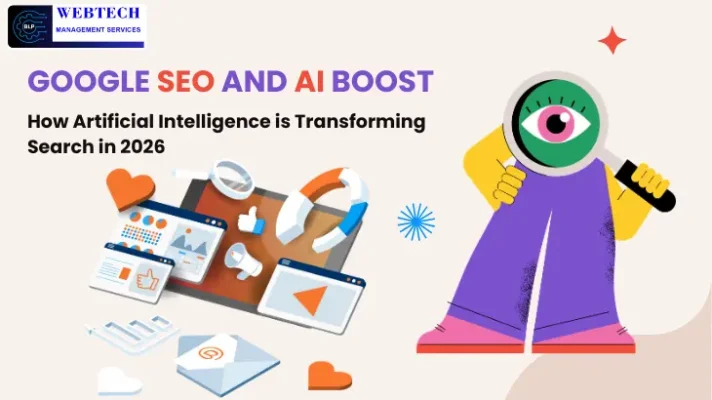
The world of digital marketing is evolving faster than ever. In 2026, Google SEO is no longer just about keywords and backlinks. Artificial Intelligence (AI) has become the backbone of modern search engines, helping Google deliver smarter, more personalized results to users.
With the rise of AI tools, machine learning algorithms, and conversational search, businesses must adapt their SEO strategies to stay visible online. Today, SEO is about understanding user intent, creating helpful content, and leveraging AI-driven insights to improve performance.
For businesses, this shift brings both opportunities and challenges. Companies that understand how Google SEO and AI work together will gain a powerful advantage in search rankings and customer engagement.
Understanding Google SEO in the AI Era
Search Engine Optimization (SEO) has always focused on improving website visibility on Google. However, the traditional methods of SEO are evolving.
Earlier, ranking on Google depended mainly on:
- Keyword density
- Backlinks
- Meta tags
- Technical SEO
But in 2026, Google uses AI-driven algorithms to evaluate content quality, user behavior, and real value provided to users.
Modern SEO focuses on:
- Search intent optimization
- High-quality human content
- Topic authority
- User experience
- AI-friendly structured data
Google’s AI systems now analyze how users interact with a page including how long they stay, what they click, and whether the content actually answers their question.
This means real value and authenticity are more important than ever before.
What is AI Boost in Google Search?
AI Boost refers to the integration of artificial intelligence technologies into search engines to make results more accurate and helpful.
AI helps Google in several ways:
1. Understanding Search Intent
AI can interpret the meaning behind a search query instead of just matching keywords.
Example: If someone searches “best marketing strategy for small startups”, Google understands that the user wants advice, strategies, and examples.
2. Personalized Results
AI analyzes user behavior, location, and preferences to show personalized search results.
3. Faster Content Analysis
AI systems quickly evaluate millions of pages to determine which content is most useful.
4. Conversational Search
With voice assistants and AI chat features, users now ask questions in a natural conversational way.
Example: Instead of searching “SEO benefits”, users might ask:
“Is SEO still useful for small businesses in 2026?”
AI helps Google understand these natural language queries.
Google SEO vs AI SEO: Key Differences
| Traditional SEO | AI-Driven SEO |
| Keyword-focused | Intent-focused |
| Backlink-heavy ranking | Content quality ranking |
| Static search results | Personalized results |
| Manual optimization | AI-powered insights |
| Basic analytics | Predictive data analysis |
Traditional SEO techniques still matter, but AI-powered optimization provides deeper insights and better ranking opportunities.
Businesses that combine SEO expertise with AI tools will see stronger results.
How AI is Changing SEO Strategies
AI is transforming the way marketers approach SEO.
Here are some major changes happening in 2026.
1. Content Quality is the Biggest Ranking Factor
Google AI can now detect:
- Helpful content
- Spam content
- AI-generated low-quality content
- Keyword stuffing
This means businesses must focus on original, informative, and user-focused content.
Humanized content that solves real problems ranks better.
2. Voice Search Optimization
More users are searching using voice assistants.
Example voice searches:
- “Which SEO strategy works best in 2026?”
- “How can my business rank on Google fast?”
Voice queries are longer and conversational, so SEO strategies must adapt.
3. AI-Powered Keyword Research
AI tools now help marketers discover:
- Long-tail keywords
- Trending topics
- User search patterns
This helps businesses create content that matches real search behavior.
4. Predictive SEO Insights
AI tools can predict:
- Future search trends
- Keyword competition
- Ranking opportunities
This allows businesses to plan smarter SEO campaigns.
How Useful Will Google SEO and AI Be in 2026?
In 2026, the combination of SEO and AI will be one of the most powerful digital marketing tools.
Here’s why:
Better Targeted Traffic
AI helps businesses attract users who are genuinely interested in their services.
Higher Conversion Rates
Intent-based SEO brings visitors who are ready to take action.
Faster Content Optimization
AI tools help marketers improve content quickly.
Smarter Marketing Decisions
Data-driven insights allow businesses to make better strategies.
For startups and growing companies, AI-driven SEO can reduce marketing costs while improving results.
Impact of AI SEO on Businesses
The influence of AI in SEO is already changing how businesses operate online.
Here are some major impacts.
1. Increased Online Competition
With AI tools available to everyone, more businesses are investing in SEO.
This means quality content and strong branding are essential.
2. More Focus on Authority and Trust
Google prefers websites that show:
- Expertise
- Trustworthiness
- Authority
Businesses must build strong brand credibility.
3. Faster Decision Making
AI-powered analytics tools allow companies to track performance and adjust strategies instantly.
4. Cost-Effective Marketing
Compared to paid advertising, SEO provides long-term benefits.
With AI optimization, businesses can achieve sustainable organic growth.
Challenges of AI in SEO
While AI brings many benefits, there are also some challenges.
Over-Automation
Too much reliance on AI-generated content can reduce originality.
High Competition
Many companies are using AI tools, increasing competition in search results.
Constant Algorithm Updates
Google continues to update its AI algorithms, requiring businesses to stay updated.
The best approach is combining AI tools with human creativity and expertise.
The Future of SEO with AI
The future of SEO will be driven by three key factors:
Human-Centered Content
Authentic and helpful content will dominate rankings.
AI-Assisted Optimization
AI will assist marketers with research, analysis, and optimization.
Experience-Based Search
Google will prioritize websites that provide the best user experience.
Businesses that embrace innovation, creativity, and data-driven strategies will succeed in the AI-powered search landscape.
Final Thoughts
Google SEO and AI are shaping the future of digital marketing. In 2026, success in search rankings will depend on high-quality content, understanding user intent, and using AI-powered tools strategically.
Rather than replacing SEO, AI is making it smarter, faster, and more effective.
Businesses that adapt early will gain a strong competitive advantage, attract more customers, and build sustainable online growth.
In the coming years, the combination of human creativity and artificial intelligence will define the next generation of successful SEO strategies.
Frequently Asked Questions (FAQs)
1. Is SEO still relevant in 2026?
Yes, SEO is more important than ever in 2026. With AI-powered search engines, businesses must focus on high-quality content and user intent to rank effectively.
2. How does AI improve SEO performance?
AI helps analyze user behavior, identify keyword opportunities, predict trends, and optimize content for better search visibility.
3. Can AI replace SEO experts?
No. AI can assist with data analysis and automation, but human expertise is still required to create strategy, creativity, and meaningful content.
4. What is the biggest SEO trend in 2026?
The biggest trend is intent-based content optimization, where Google prioritizes helpful content that directly answers user queries.
5. How can businesses use AI for SEO?
Businesses can use AI tools for keyword research, competitor analysis, content optimization, predictive analytics, and performance tracking.